
What I Learned from a Mechanical Engineer That Every College Student Needs to Hear
Dec 18, 2025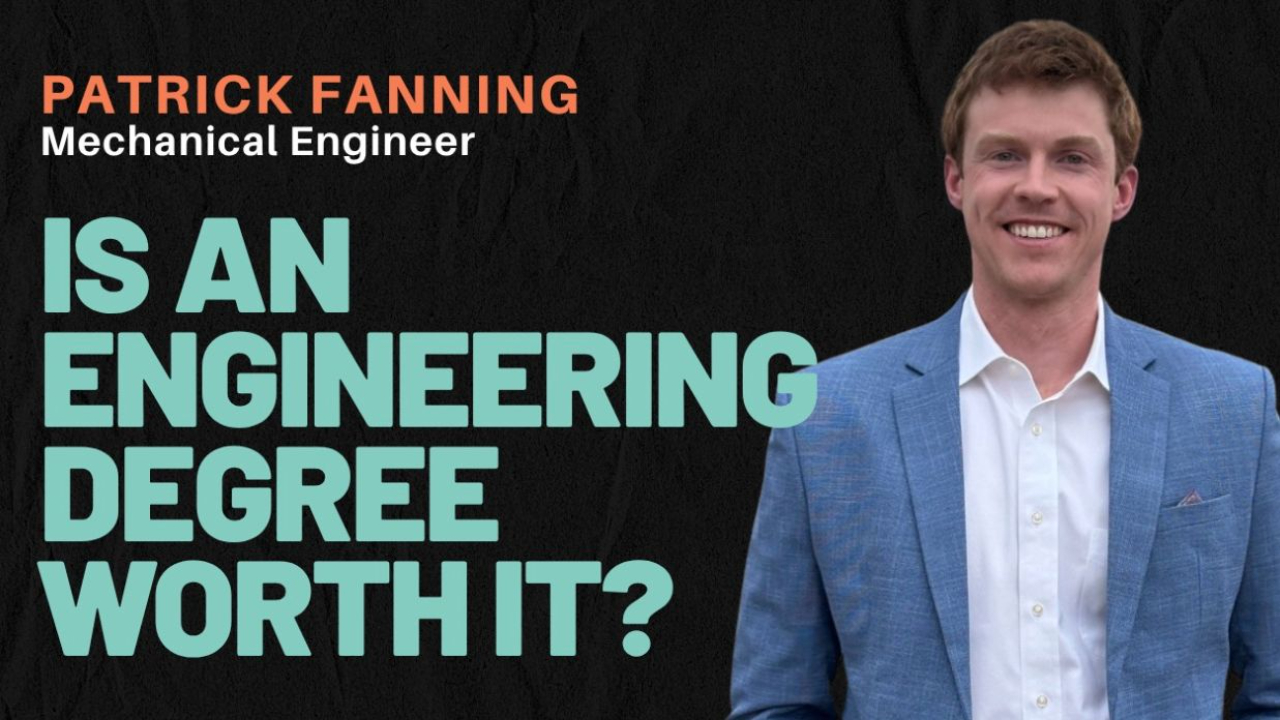
Whether you’ve already declared your major, second-guessing your path, or quietly panicking because everyone around you seems to “have it figured out,” this newsletter is for you.
I recently interviewed Patrick Fanning, a mechanical engineer who has already worked on multimillion-dollar energy projects at ExxonMobil and now advises infrastructure clients as a consultant at PwC. His story is about engineering, yes — but more importantly, it’s about making career decisions when you can’t see the whole picture yet.
And what I learned from him is something every college student needs to hear—engineering or not. Let’s start with real talk…
🎯 The Myth of Certainty
We often treat choosing a major like signing a lifelong contract. Pick wrong, and you’re stuck forever. But Patrick’s journey reminds us:
Your major isn’t the final destination. It’s simply the first road you take, and there are countless exits, pivots, and upgrades along the way.
When Patrick chose mechanical engineering, he didn’t have it all figured out. He didn’t map out the next 20 years. He simply followed what sparked his curiosity: math, problem-solving, and a desire to build things that mattered.
That one decision didn’t limit him — it opened doors.
Because future employers don’t just hire your major: They hire your ability to think, adapt, and solve problems.
🤔 So… What Makes Engineering So Appealing (and Intimidating)?
Patrick put it perfectly:
- Engineering is one of the toughest majors you can pick.
- It’s also one of the most versatile.
Translation: Engineering doesn’t box you in. It positions you as someone who can be dropped into any industry and make things happen.
“Engineering is basically a stamp that says you’re willing to work hard, solve complex problems, and think critically in any situation.” — Patrick Fanning.
📌 For Engineering Students: Is All That Hard Work Worth It?
Let’s not sugarcoat it: Engineering is challenging.
You will take courses that make your brain hurt. You will have moments where you question why you ever signed up for thermodynamics. But if you enjoy math, science, and solving big problems, there is no better launchpad.
🎓 Engineering offers:
- Career flexibility: Energy, robotics, finance, consulting, aerospace — the list is endless
- High earning potential: Engineering majors consistently rank among the top in starting salary
- Meaningful work: Engineers literally build, design, and shape the future
- A powerful personal brand: An engineering degree signals resilience, intelligence, and grit
If you are drawn to technical challenges and analytical thinking — yes, engineering is worth it. Not because it’s easy, but because it elevates what you’re capable of doing.
For Every Student: The Universal Career Lessons from Patrick’s Journey
1. Your First Internship Probably Won’t Come from a Job Board
Patrick had zero experience. His resume included “cashier at Albertsons.” His first internship? It came from an email he sent to a family friend. He sent a lot of introductory emails sharing what he was doing and asking for help building connections.
College Tip: Don’t wait for opportunities to find you. Create them. Use this script (yes, really copy & paste it):
“Hi, I’m [Your Name], a student at [School]. I’m exploring careers in [industry/interest]. If you know of any internship opportunities — even shadowing or part-time — I’d be grateful for the opportunity to talk.”
Networking isn’t about who you know. It’s about who knows what you’re looking for.
2. Career Fairs Are Practice Grounds
Patrick admitted he avoided his first one because he thought first-year students wouldn’t be taken seriously. Later, he regretted it.
Every conversation is a rep. Every rep builds confidence.
Even if you don’t land an internship, you’re building the skill that will matter more than your GPA: your ability to talk about who you are and what you bring to the table.
3. Your Elevator Pitch Should Make You Memorable
Most students introduce themselves like a résumé: “Hi, I’m Marita and I’m a junior studying mechanical engineering.” That’s a fact — but it’s not a connection.
Patrick shared that what made him stand out wasn’t listing classes. It was adding a personal spark, like being a die-hard Chicago Bears fan or growing up curious about how things worked. It made people remember him as a person, not just a major.
Here’s a better approach: combine personality + purpose.
✅ Instead of: “Hi, I’m majoring in mechanical engineering.”
✅ Try: “I’ve always loved building things and solving complex problems — now I’m studying mechanical engineering because I want to work on energy solutions that power the future.”
Or if you’re not an engineer: ✅ “I’m fascinated by why people make decisions, which is why I’m pursuing marketing to help purpose-driven brands reach the right audiences.”
One introduces your major. The other introduces you.
4. Real Life Doesn’t Come With an Answer Key
In college, problems are solvable. There’s always a correct answer. In the workplace? Not so much.
Success isn’t about knowing the answer. It’s about being willing to define the problem, ask the questions, and try solutions.
“If you can define the question, you are already halfway to solving it.” — Patrick Fanning.
5. Your First Job Doesn’t Lock You In
Patrick went from field engineering in hard hats to strategy consulting in boardrooms. Same degree. Totally different environment.
Your first job is like picking your first hiking trail — it gets you moving, but you can still switch paths, explore side trails, or reach a new summit you didn’t even know existed.
Think of your first job as data gathering — it reveals your strengths, your interests, and what you want to leave behind.
🧭 So… Where Do You Go From Here?
Maybe you’re confident in your major. Maybe you’re quietly freaking out. Maybe you’re somewhere in the messy middle (which, by the way, is where most students are — they’re just good at hiding it).
What Patrick’s story reminded me of is this:
- The goal is not to get it “right” on the first try.
- The goal is to keep moving forward with curiosity and courage.
Because clarity is not found through overthinking, clarity is found through exploration. Check out the full podcast episode to learn more about great advice on how to navigate the transition from college to your career successfully.
✅ Your Next Step: Take the Career Compass
If you’re still figuring out what comes next, or even if you’re 80% sure of your path and want to validate it, the Career Compass was designed for you.
🎯 It helps you:
- Discover careers that align with your interests, strengths, and values
- Learn which industries you might thrive in (even ones you haven’t considered yet)
- Create a personalized action plan based on where you are right now in your journey
Whether you have no clue or need clarity on your direction, the Career Compass gives you a starting point and a path forward.
📌 Take the assessment and share your results with me. I read every single one.
✨ Final Thought
Patrick said something at the end of our interview that I haven’t stopped thinking about:
“Don’t be afraid to take that first step. Worst-case scenario, you end up exactly where you already are, and best-case scenario is it changes your entire future.”
So go ahead. Take the step. Send the email. Meet someone new. Explore the major. Be curious.
Your career isn’t a straight line. It’s a journey of discovery.
And you’re already on your way. Until next time — stay curious.
